
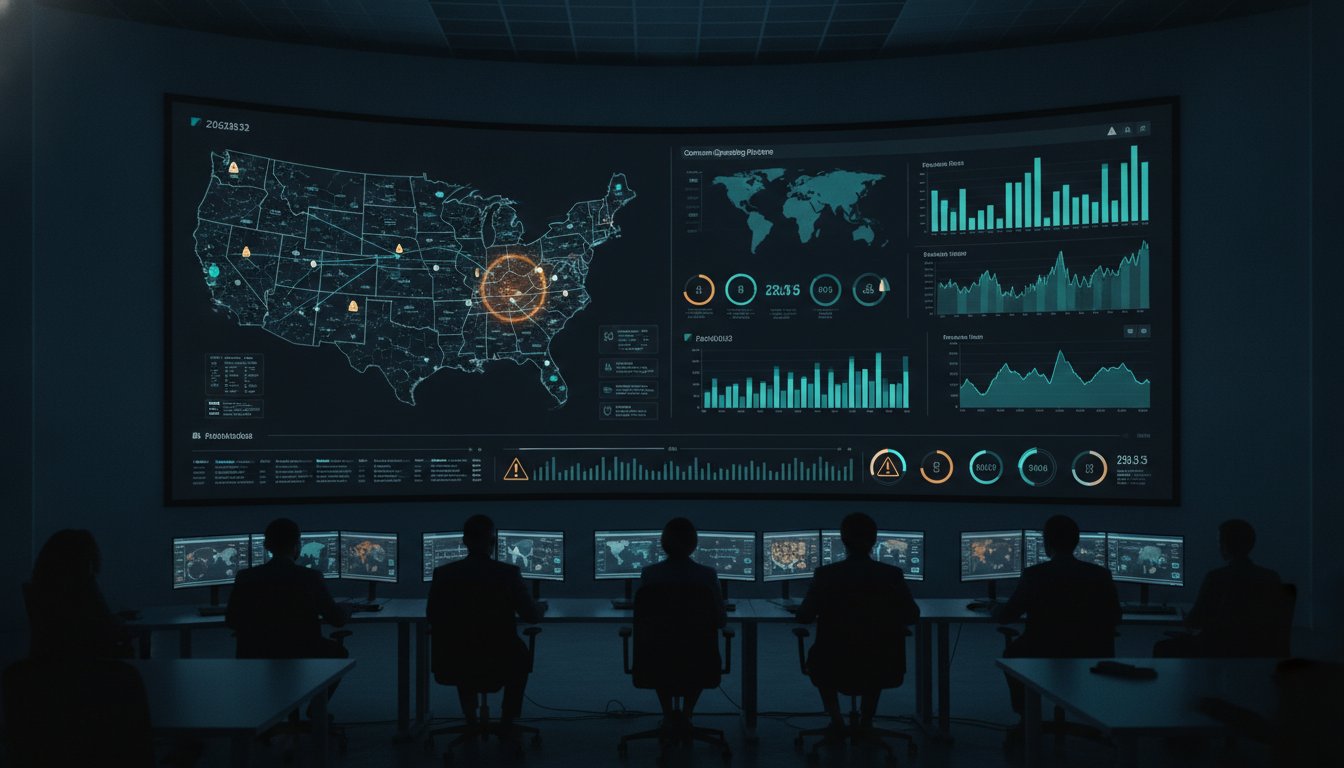
In a high-stakes environment, more data often leads to less clarity. When an incident breaks, operators shouldn’t have to toggle between various video feeds, SIEM alerts, and geospatial maps while the clock is ticking. This fragmentation creates a cognitive load that delays response times and leaves critical gaps in situational awareness. A true Common Operating Picture isn’t just a video wall showing every available stream; it’s a strategic filter that ensures the right information reaches the right person at the exact moment it matters.
Most control rooms already have the screens. What they’re missing is the layer that decides what goes on them, and escalates automatically when something needs attention. You likely recognize the frustration of siloed tools that provide only a partial view of the operational reality. This article explains how to transform these disjointed data streams into a unified operational intelligence layer. We will preview the methodology for automating incident escalation and fostering seamless collaboration between the command center and field teams to ensure decisive action when every second counts.
Key Takeaways
- Identify why fragmented data from tools like Axon and SIEM creates cognitive overload and delays response times during critical incidents.
- Learn how to unify disjointed data streams into a single Common Operating Picture that prioritizes essential information for decisive action.
- Understand the role of an operational intelligence layer in automating incident escalation and managing what appears on control room screens.
- Discover how to extend situational awareness to field teams through mobile integration, ensuring a seamless flow of intelligence beyond the command center.
- Explore how professional design services optimize the physical environment to support rapid human judgment in high-stakes operations.
Defining the Common Operating Picture in Mission-Critical Environments
Operational readiness depends on a single, authoritative source of truth. A Common Operating Picture (COP) provides this by creating a continuously updated, centralized display of tactical and strategic intelligence. It isn’t merely a collection of data points; it’s the bedrock of successful mission critical operations. Without a unified view, teams operate in silos, reacting to fragmented signals rather than a cohesive reality. This lack of coordination often results in delayed response times and compromised safety.
Most control rooms already have the screens. What they’re missing is the layer that decides what goes on them, and escalates automatically when something needs attention. This is the fundamental difference between a standard video wall and a true Common Operating Picture. While a video wall provides the real estate, the COP provides the intelligence. It has evolved from static, manual maps into a dynamic, event-driven visualization layer that transforms raw data into actionable insights.
Commanders and operators no longer have the luxury of time to manually correlate feeds. Modern environments demand a system that filters noise and highlights anomalies instantly. By moving toward real-time oversight, organizations ensure that their decision-making process is proactive rather than reactive. This evolution ensures that the most critical information is always front and center, allowing for absolute technical reliability when the stakes are highest.
Tactical vs. Strategic Situational Awareness
Effective operations require two distinct levels of visibility. Front-line operators need tactical awareness to visualize immediate threats, such as a localized security breach or a hardware failure. Conversely, leadership requires strategic awareness to manage global asset protection and long-term risk. A sophisticated COP aggregates data for executive SITREPs while maintaining the granular detail needed for rapid response. It provides the geospatial oversight necessary to track assets across different regions, ensuring that everyone from the technician to the director sees the same reality through a lens relevant to their role.
The Core Components of a Modern COP
A resilient Common Operating Picture integrates diverse data streams into a unified hub. This includes real-time feeds from Video Management Systems (VMS), Security Information and Event Management (SIEM) platforms, and a vast array of IoT sensors. The goal is a unified interface that fosters cross-departmental collaboration. When an incident occurs, the system must offer dynamic scalability, adjusting its focus to meet incident-specific requirements. This ensures that as a situation grows in complexity, the intelligence layer adapts, maintaining clarity and control throughout the entire lifecycle of the event.
The Fragmented Reality: Why Traditional COPs Fail
Disconnected systems create a primary vulnerability in modern command centers. When an incident unfolds, operators often find themselves toggling between Axon body-cam feeds, VMS video streams, and CAD dispatch logs. This manual process of tool-switching isn’t just inefficient; it’s dangerous. Each second spent navigating a different interface is a second lost in response. A traditional Common Operating Picture often fails because it’s treated as a destination rather than a process. It becomes a passive display of information that requires constant human intervention to remain relevant.
Most control rooms already have the screens. What they’re missing is the layer that decides what goes on them, and escalates automatically when something needs attention. Without this intelligence, the video wall is simply a collection of pixels. It doesn’t tell the story of the threat; it only shows the symptoms. The hidden cost of manual data correlation is measured in minutes of delayed response, which can be catastrophic in mission-critical environments.
The Problem of Data Silos
Stand-alone tools provide only a partial, disconnected view of the operational landscape. While a VMS might show a perimeter breach, it rarely communicates directly with the SIEM to correlate that breach with a simultaneous cyber-attack. Integrating legacy systems with modern threat intelligence remains a significant hurdle. These gaps in the common operating picture often go unnoticed until they evolve into full-scale crises. Organizations frequently realize too late that their tools are working against each other rather than as a unified front.
Cognitive Overload and the Human Element
Human operators aren’t built to monitor hundreds of static feeds for hours on end. The psychological impact of constant information noise leads to alarm fatigue, where critical indicators are dismissed as background chatter. When decision-makers are overwhelmed, they miss subtle threat patterns that an automated system would catch instantly. This environment doesn’t just lead to missed incidents; it drives high turnover rates among skilled staff. By implementing a proactive operational intelligence layer, organizations empower their teams to act with certainty rather than guessing amidst the chaos. This shift from passive monitoring to active intelligence reduces the burden on the human operator, ensuring that their judgment is applied only where it’s most needed.
- Tool fragmentation leads to a 34% increase in response times due to manual data intake.
- Passive monitoring of static feeds results in a higher probability of missed critical events.
- Siloed data prevents a comprehensive understanding of multi-vector threats.
Introducing the Operational Intelligence Layer
Achieving a true Common Operating Picture requires more than just high-resolution displays. Most control rooms already have the screens. What they’re missing is the layer that decides what goes on them, and escalates automatically when something needs attention. This is the role of an operational intelligence layer. It functions as the cognitive center of the command environment, moving beyond passive data display to active, intelligent oversight. It ensures that human judgment is applied only where it’s most valuable, rather than being wasted on manual data correlation.
The vis/ability platform serves as this central hub. It transitions your team from reactive monitoring to a proactive, event-driven posture. Instead of operators searching through fragmented tools for the source of an alarm, the platform filters the noise. It identifies mission-critical information automatically and presents it in a way that demands immediate, informed action. This steady flow of intelligence provides the bedrock upon which critical decisions are made, even when the complexity of the environment begins to escalate.
Event-Driven Situational Awareness
Precision is the priority in any command operation. Event-driven situational awareness automates display changes based on real-time alerts from your integrated systems. When a perimeter sensor triggers or a network anomaly is detected, the platform immediately reconfigures the visual environment. This removes the need for manual display management, significantly reducing the ‘time to action’ for every operator. By ensuring that each team member sees the most relevant data for their specific role, the system maintains clarity amidst potential chaos. Seconds matter. Automating the visual response ensures those seconds are used for resolution rather than navigation.
The vis/ability Hub: Unifying Your Ecosystem
Modern operations depend on a vast array of disparate applications, from VMS and CAD to specialized IoT sensors. The vis/ability platform aggregates these tools into a single, unified view. This creates one version of the truth across the entire organization, whether the team is in a command center, a huddle room, or on mobile devices. This unification is particularly vital for creating a cybersecurity common operating picture. It bridges the gap between IT oversight and physical security, allowing teams to visualize how a digital threat might impact physical assets. This comprehensive visibility ensures that no threat vector remains hidden in a silo, providing a level of operational readiness that traditional monitoring tools cannot match.

Extending the Picture: Mobile vis/ability and Field Collaboration
A Common Operating Picture loses its value if it remains trapped within the four walls of a command center. Information silos don’t just exist between software applications; they exist between the people who need to act on that data. This “last mile” problem often results in field responders operating on incomplete intelligence while the control room has total visibility. Bridging this gap requires a platform that extends high-resolution video and data feeds to huddle rooms, satellite offices, and mobile devices. When intelligence is restricted by geography, the mission is compromised.
Most control rooms already have the screens. What they’re missing is the layer that decides what goes on them, and escalates automatically when something needs attention. By deploying an operational intelligence layer that moves with the team, organizations ensure that tactical clarity follows the responder into the field. This bidirectional flow allows field teams to contribute real-time data back to the central operating picture. It ensures the command center is never blind to the shifting reality on the ground, creating a loop of constant, verified intelligence.
Mobile vis/ability for Distributed Teams
Field agents require the same level of intelligence as command center operators to manage high-stakes incidents safely. Mobile vis/ability provides secure, low-latency streaming that breaks down communication barriers between dispatch and response teams. When a responder can view the same live VMS feed or geospatial map as the dispatcher, the risk of miscommunication drops significantly. This technical reliability is the bedrock of operational continuity. It ensures that every decision, whether made at a desk or on the move, is based on the most current intelligence available.
Collaborative Decision-Making in Crisis
Coordinating multi-agency responses requires a shared view that transcends physical location. Shared views allow off-site personnel to maintain total oversight, facilitating rapid, collaborative decision-making during a crisis. Mobile integration ensures that 100% of field personnel maintain active situational awareness, effectively eliminating the information blackout that occurs when responders lose visual contact with command center intelligence. This level of connectivity transforms the Common Operating Picture from a static display into a living, mobile ecosystem. It empowers individuals to act with greater certainty when seconds are the only currency that matters.
To see how your team can maintain visibility anywhere, explore our Mobile vis/ability solutions today.
Implementing a High-Performance COP: Design and Engineering
The effectiveness of a Common Operating Picture depends on the physical and digital infrastructure that supports it. Software alone cannot solve the problem of poor visibility or operator fatigue if the environment isn’t engineered for high-stakes decision-making. Professional control room design services ensure that ergonomics, sightlines, and video wall placement are optimized for maximum situational awareness. When operators are forced to strain to see critical data or navigate poorly designed workstations, their reaction time suffers. Proper engineering accounts for the human element, placing the most vital information in the primary field of view to reduce cognitive strain during a crisis.
Most control rooms already have the screens. What they’re missing is the layer that decides what goes on them, and escalates automatically when something needs attention. This intelligence must be paired with hardware that offers 24/7 resilience. Selecting displays and processors that can withstand continuous operation isn’t a luxury; it’s a necessity for mission-critical reliability. Future-proofing a GSOC requires a strategic approach to both data volumes and evolving threats, ensuring that the system remains a bedrock of reliability even as the operational landscape shifts and expands. A well-designed room scales with your needs, allowing for the integration of new data streams without cluttering the visual environment.
Engineering for Operational Readiness
Operational readiness requires designing for redundancy and fail-safe performance at every level. In operational industries, there’s no room for downtime or system lag. Utilizing Commercial Off-the-Shelf (COTS) solutions reduces complexity while maintaining the high standards required for mission-critical tasks. This approach allows organizations to leverage proven, reliable technology that integrates seamlessly with existing workflows. By avoiding proprietary dead-ends, you ensure that your environment supports rapid, high-stakes decision-making and remains adaptable to future technological shifts.
Next Steps: From Vision to Reality
Transitioning from a fragmented environment to a unified intelligence layer begins with a thorough audit of your current capabilities. Identify the situational awareness gaps and the data silos that hinder your team’s performance. For organizations looking to bridge these gaps through advanced data strategy, cadeon.com provides specialized expertise in business intelligence and analytics. Similarly, for healthcare organizations, Virtual Source & Co offers professional medical billing and claim review to ensure administrative data is as accurate and unified as tactical feeds. Consider why operators might miss incidents on the video wall or where manual data correlation is causing delays. Once these pain points are clear, customizing the vis/ability platform to your unique requirements becomes the path forward. This process transforms your command center from a room full of screens into a powerful engine of operational certainty. It provides the clarity needed to act with absolute confidence when the mission is on the line, ensuring that every decision is backed by a complete and accurate Common Operating Picture.
Securing Operational Certainty Through Unified Intelligence
Operational readiness depends on the ability to filter noise and act on verified intelligence. Transitioning to a true Common Operating Picture requires more than just adding screens; it demands an intelligent layer that prioritizes essential information and automates escalation. By unifying disparate tools into a single hub, your team moves from reactive monitoring to proactive, event-driven situational awareness. This shift ensures that clarity is maintained across the command center and extended to every mobile responder in the field.
Activu brings over 40 years of expertise in mission-critical visualization to every engagement. Trusted by federal government and defense agencies, we provide specialized solutions for the utilities, energy, and transportation sectors. Most control rooms already have the screens. What they’re missing is the layer that decides what goes on them, and escalates automatically when something needs attention. Take the next step in future-proofing your GSOC and empowering your team to act with absolute certainty in critical moments.
Request a Demo of the vis/ability Platform
Frequently Asked Questions
What is a Common Operating Picture (COP)?
A Common Operating Picture is a continuously updated, centralized display of tactical and strategic intelligence that provides a single version of the truth for an entire organization. It aggregates data from multiple sources to ensure that every stakeholder, from front-line operators to executive leadership, shares the same situational awareness. This unified view is essential for coordinating complex responses in mission-critical environments where fragmented information can lead to catastrophic delays.
How does a COP differ from a standard video wall?
A standard video wall provides the physical real estate for displaying information, but a Common Operating Picture provides the intelligence behind what’s shown. Most control rooms already have the screens. What they’re missing is the layer that decides what goes on them, and escalates automatically when something needs attention. While a video wall might show static feeds, a true COP uses an operational intelligence layer to filter noise and prioritize critical alerts.
What are the primary benefits of a common operating picture for security?
The primary benefits include drastically reduced response times and the elimination of data silos. By unifying tools like VMS, CAD, and SIEM, a COP ensures that security teams don’t waste time toggling between disjointed interfaces. It automates the escalation of critical incidents, allowing for a proactive rather than reactive posture. This leads to higher operational readiness and ensures that human judgment is applied precisely where it’s needed most during high-stakes events.
Can vis/ability integrate with my existing SIEM and VMS?
Yes, the vis/ability platform is designed to function as the central hub into which all your existing tools flow. It integrates seamlessly with VMS, SIEM, and IoT sensors to create a unified operational intelligence layer. While tools like Axon provide essential data, they often offer only a partial solution on their own. vis/ability makes these tools more useful for the entire team by aggregating their outputs into a single, actionable interface.
How does event-driven situational awareness reduce operator fatigue?
Event-driven situational awareness reduces fatigue by eliminating the need for operators to monitor hundreds of static, irrelevant feeds. Instead of hunting for anomalies, the system automatically reconfigures displays to highlight critical alerts as they occur. This filtering process removes information noise and ensures that operators only see data that requires human intervention. By reducing cognitive load, teams remain sharp and focused on resolving incidents rather than managing screen layouts.
What role does a COP play in cybersecurity operations?
A Common Operating Picture bridges the gap between physical security and IT oversight by providing a cybersecurity common operating picture. It allows teams to visualize how digital threats, such as a network breach, might impact physical assets and infrastructure in real-time. This comprehensive visibility ensures that multi-vector threats are identified early, preventing silos between cybersecurity experts and physical security operators from compromising the overall mission.
How do I extend a common operating picture to field teams?
You extend the Common Operating Picture to field teams using mobile vis/ability solutions that provide secure, low-latency data streaming. This ensures that responders on the ground have access to the same high-resolution video and geospatial intelligence as the command center. By breaking down geographical barriers, field teams can contribute data back to the central hub in real-time, maintaining operational continuity and preventing information blackouts during critical maneuvers.
What are the first steps in designing a mission-critical control room?
The first steps involve auditing your current situational awareness gaps and identifying fragmented data streams that cause delays. You must then focus on both the physical engineering and the digital intelligence layer. Professional control room design services help optimize ergonomics, sightlines, and video wall placement to support rapid decision-making. Simultaneously, you must select a platform that can unify your software ecosystem into a single source of truth for 24/7 resilience.